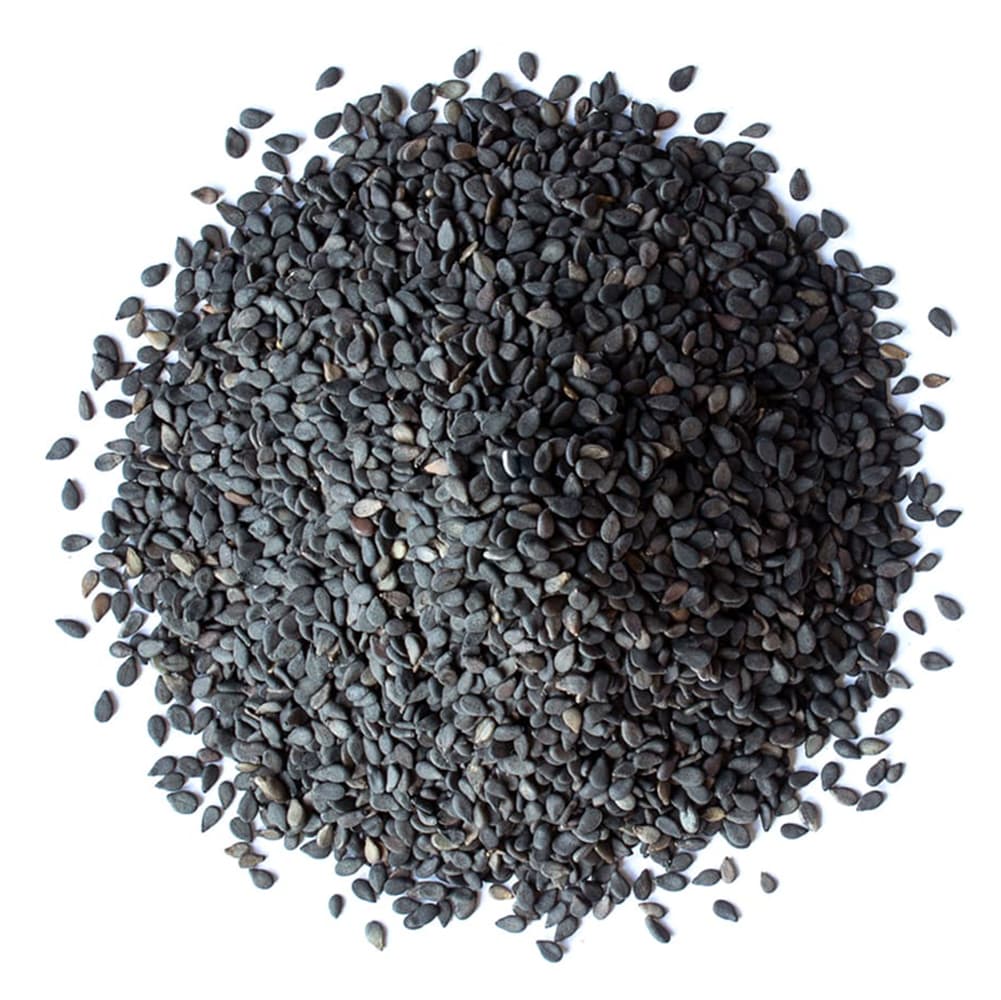
Ingredients: BLACK SESAME SEEDS
Warning: Contains Sesame Seeds
Suggested storage time from the manufacture date*: Up to 1.5 years
Store in: Cool, Dry Place
Allergy info: Packaged in a Facility That Also Handles Tree Nuts, Wheat, Sesame, Soybeans, Fish
* Please contact us for the Lot-specific information
- — Kosher, Raw, Vegan
- — Very Low in Cholesterol and Sodium
- — Rich in Calcium, Iron, Magnesium, Phosphorus, Copper and Manganese
Like White But Better
Black Sesame Seeds are prevalent in Eastern countries, including India, Japan, Korea, and China. It’s not a surprise considering that they have a richer flavor than plain white sesame. Also, as black sesame is usually unhulled, it contains more nutrients. In particular, it’s rich in calcium, protein, and fiber. The main difference between white and black sesame seeds is their appearance. These are indeed inky-black, which makes them a great addition to many dishes solely for the aesthetical value of it. Raw black sesame seeds also have a richer taste with a trace of bitterness due to the hulls. However, in a recipe, this will be noticeable only if you use large quantities of the seeds. For example, flavor differences between white and black sesame paste are apparent. But if you simply sprinkle a handful of seeds on homemade bread, the taste will be nearly the same.
How to Use for Maximum Benefits
It’s easy to include raw black sesame in your meals. You can sprinkle the seeds on salads, soups, and sandwiches. Black sesame seeds are also a traditional ingredient in furikake (Japanese spice mix) and a multitude of desserts from India, China, Korea, and Japan. Black sesame soup, made from these seeds, rice, water, and sugar, is a typical Asian sweet that you definitely should try. The exotic flavor is sure to become one of your favorites. Add some unhulled black sesame to smoothies and baked goods. It will both add a dash of color and enhance the nutritional value of the meal. Moreover, because the hull on these seeds is intact, it will add crunchiness to the texture of any food. Store black sesame seeds in a cool, dry place; it’s imperative to keep the seeds away from heat.